The Savvy Traveler’s Blueprint: Bali to Raja Ampat for the Dry Season
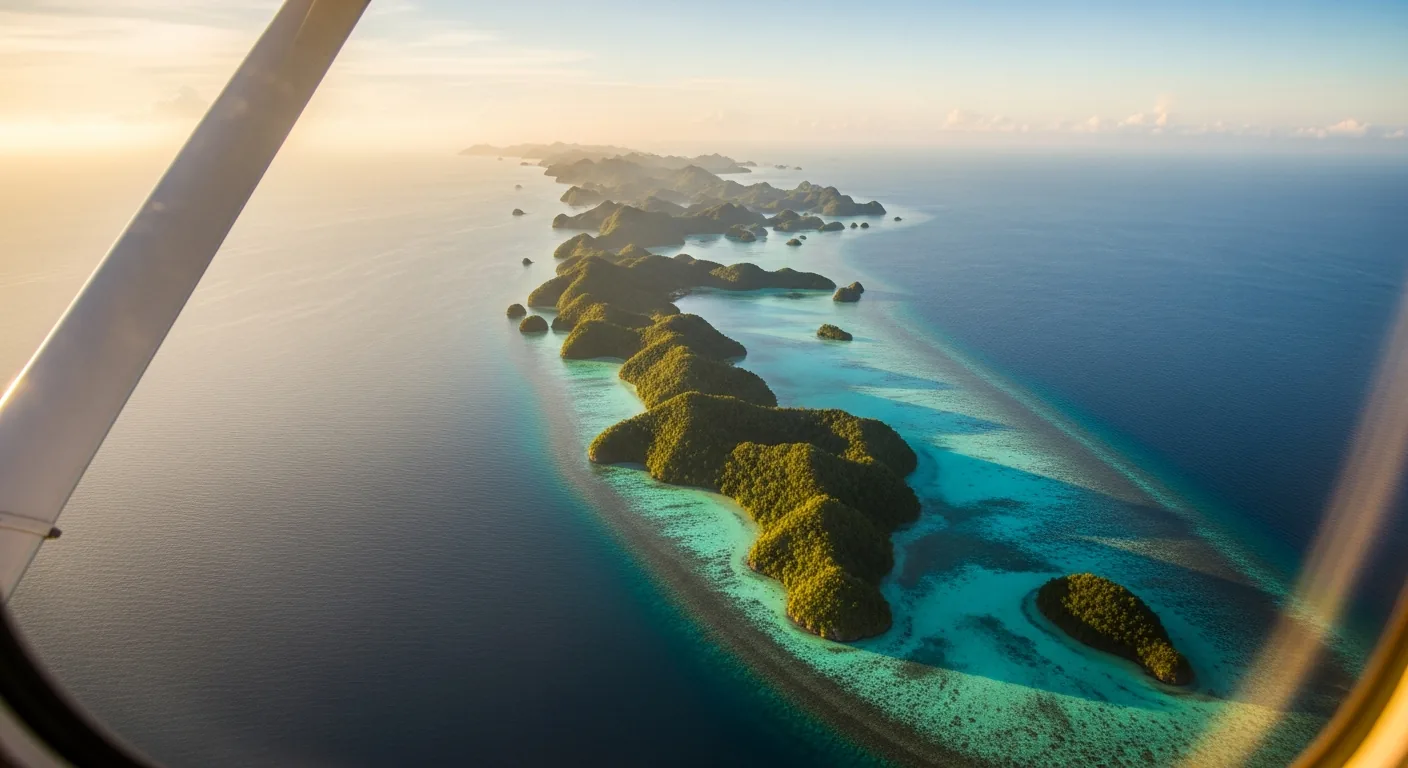
The morning light in Seminyak has a particular quality, filtering through the frangipani leaves as the first scooters begin their daily chorus. You’ve completed your dives at the USAT Liberty wreck in Tulamben, explored the contours of Nusa Penida, and now, the map of Indonesia pulls your attention eastward. The question arises, not of if, but how, to bridge the distance between this island of familiar comforts and the planet’s most biodiverse marine sanctuary: Raja Ampat. The archipelago’s name, translating to ‘The Four Kings,’ feels appropriate for a destination that demands a certain logistical fealty before revealing its treasures.
Connecting from Bali to Raja Ampat is a multi-stage process that requires careful planning, particularly to maximize your time during the prime October to April diving season. This is not a simple island-hop; it is a calculated transit from a global tourism hub to one of the last true frontiers of underwater exploration. The journey itself, from Denpasar’s Ngurah Rai International Airport (DPS) to the small port of Waisai, the gateway to the northern islands, is part of the expedition. Misinformation can lead to costly delays and missed connections, compromising a trip where every moment in the water counts. This guide provides a clear, detailed pathway, breaking down the critical decisions and transit points for a seamless transition from Bali’s volcanic shores to Raja Ampat’s labyrinthine karst islands. See also: Bali to Raja Ampat Travel Guide About.
Understanding the Route: From Denpasar to the Four Kings
The primary artery for any Bali to Raja Ampat itinerary involves air travel from Denpasar (DPS) to Sorong’s Dominique Edward Osok Airport (SOQ) in West Papua. There are no direct flights. Every route requires at least one connection through a major Indonesian hub. The two most viable and frequently used transit points are Soekarno–Hatta International Airport (CGK) in Jakarta and Sultan Hasanuddin International Airport (UPG) in Makassar, South Sulawesi. From Sorong, the final leg is a two-hour sea transfer to Waisai on Waigeo Island, the administrative capital of the Raja Ampat Regency.
The entire transit, from hotel checkout in Bali to arrival in Waisai, typically takes between 15 and 24 hours, depending on your chosen layover. Most flight schedules are structured as overnight “red-eye” services, departing Denpasar in the evening and arriving in Sorong between 6:00 AM and 8:00 AM local time (West Papua is two hours ahead of Bali). This early arrival is by design; it aligns perfectly with the morning speedboat and ferry departures to Waisai, allowing travelers to connect to their liveaboard or resort on the same day. Understanding this rhythm is the first step in constructing an efficient Denpasar to Raja Ampat travel plan. The goal is to minimize time in transit hubs and maximize it within the boundaries of the Coral Triangle, a region holding over 600 species of reef-building corals—75% of the world’s total.
Choosing Your Layover: Jakarta (CGK) vs. Makassar (UPG)
The choice of transit hub is the most significant decision you will make when planning your Bali Raja Ampat flight. Both Jakarta and Makassar offer reliable connections to Sorong, primarily with Garuda Indonesia, Batik Air, and Lion Air. However, they offer different experiences and logistical considerations. According to Adrian Kalchbrenner, a logistics coordinator for several prominent Raja Ampat liveaboards, “Makassar (UPG) is the preferred transit point for 90% of our guests. The airport is more modern, significantly smaller than Jakarta’s CGK, and the UPG-SOQ leg is shorter. It simplifies the connection, reducing the margin for error on tight schedules.”
Jakarta’s Soekarno–Hatta (CGK) is a sprawling, multi-terminal complex. While it offers a greater frequency of flights, navigating between terminals for a connecting flight can be time-consuming. A layover here might involve a shuttle bus and significant walking. Conversely, Makassar’s Sultan Hasanuddin (UPG) is a single, streamlined terminal. The transfer from your inbound flight from Denpasar to the outbound gate for Sorong is often a simple 10-to-15-minute walk. For travelers carrying sensitive dive equipment and wishing to reduce transit stress, Makassar is often the superior option. The flight time from Makassar to Sorong is approximately 2 hours, whereas from Jakarta it is closer to 4 hours. See also: Bali to Raja Ampat Travel Guide.
Comparison of Transit Airports: CGK vs. UPG
| Feature | Jakarta (CGK) | Makassar (UPG) |
|---|---|---|
| Airport Size & Layout | Large, multi-terminal (Terminals 1, 2, 3). Requires inter-terminal transport. | Modern, single-terminal design. Easy navigation. |
| Typical Layover Time | 3-6 hours. Potential for longer, planned layovers. | 2-4 hours. Optimized for efficient connections. |
| Primary Airlines to Sorong | Garuda Indonesia, Batik Air, Lion Air. | Garuda Indonesia, Batik Air, Lion Air. |
| Forward Flight Time to SOQ | Approximately 4 hours. | Approximately 2 hours. |
| Overall Efficiency | Can be complex; higher potential for delays due to airport congestion. | Highly efficient; favored by dive operators for its simplicity. |
The Final Air Leg: Arriving in Sorong (SOQ)
The flight from your chosen hub into Sorong (SOQ) is the final aerial step of your Bali to Sorong journey. These flights are almost exclusively overnight, departing Jakarta or Makassar between 1:00 AM and 3:00 AM. For example, Batik Air ID6152 typically departs UPG at 03:30 AM, arriving at SOQ at 06:30 AM WIT. Garuda Indonesia GA698 follows a similar schedule. This timing is critical. Arriving early in Sorong allows you to collect your baggage, organize a taxi to the harbor (a 15-minute, approximately IDR 100,000 or USD 6.50 ride), and comfortably make the 9:00 AM public ferry or a pre-arranged private transfer.
Dominique Edward Osok Airport is a small, functional facility. Upon arrival, you will be met by a warm, humid climate. Baggage claim is straightforward. It is highly advisable to have pre-arranged your subsequent transfer with your resort or liveaboard. Their representative will typically meet you just outside the arrivals hall, holding a sign. If you are traveling independently, official airport taxis are available. Before leaving the airport vicinity, ensure you have sufficient Indonesian Rupiah (IDR) in cash, as credit card facilities become less common as you move toward the islands. A nearby ATM is usually functional, but carrying a reserve of around IDR 2,000,000 (approx. USD 130) is a sound strategy for initial expenses like ferry tickets, porters, and the marine park permit. See also: Raja Ampat Itinerary From Bali.
From Mainland to Archipelago: The Sorong to Waisai Speedboat Transfer
The transition from the mainland port of Sorong to Waisai, the entry point to the islands, is the final logistical puzzle. You have two primary options: the public express ferry or a private speedboat, often arranged by your accommodation. The public ferry is an economical and reliable choice for independent travelers. It departs from the main harbor, Pelabuhan Rakyat Sorong, at two set times daily: 9:00 AM and 2:00 PM. See also: Contact pricing.
- Public Express Ferry: The journey takes approximately two hours. Tickets for economy class are IDR 125,000 (~USD 8), while VIP seats with air-conditioning cost IDR 225,000 (~USD 14.50). Tickets are purchased at a counter at the harbor on the day of travel. The vessels are generally safe and well-maintained.
- Private Speedboat Transfer: This is the standard for most high-end resorts and liveaboards. While substantially more expensive (costs can range from USD 500 to USD 800 for a charter), it offers flexibility and convenience. The boat will be waiting for your group’s arrival and can depart on your schedule, directly to your final destination, which may be a remote island far from Waisai.
Before boarding any vessel, you must purchase the Raja Ampat Marine Park Entry Permit, known as a PIN (Personal Identification Number). The office to purchase this is located near the Sorong harbor. The cost for international visitors is IDR 700,000 (approximately USD 45), and the tag is valid for 12 months. This fee directly supports conservation efforts and local community programs within the 4.6 million-hectare marine protected area. Keep this tag with you at all times, as it will be checked at dive sites and resorts.
Sample Itineraries and Budgets: A Practical Breakdown
Planning your Raja Ampat from Bali trip requires a clear understanding of costs and timing. Below are two sample itineraries that illustrate different approaches to the journey. Flight prices are estimates for one-way travel during the high season (October-April) and can fluctuate based on booking time and airline.
Itinerary 1: The Efficient Overnight Connection
This is the most common approach, minimizing downtime and connecting directly to a morning transfer.
- 7:00 PM (Day 1): Depart Denpasar (DPS) on Batik Air to Makassar (UPG).
- 8:30 PM (Day 1): Arrive in Makassar (UPG). 3-hour layover inside the terminal.
- 11:30 PM (Day 1): Depart Makassar (UPG) on a connecting flight to Sorong (SOQ).
- 6:30 AM (Day 2): Arrive in Sorong (SOQ). (Note: time change to WIT, +1 hour from UPG).
- 7:30 AM (Day 2): Taxi to Sorong harbor. Purchase Marine Park PIN.
- 9:00 AM (Day 2): Board the public express ferry to Waisai.
- 11:00 AM (Day 2): Arrive in Waisai, ready for resort pickup.
Estimated Flight Cost: USD 250 – 400 per person, one way.
Itinerary 2: The Comfortable Layover with Hotel
For those who prefer to avoid an all-night transit, an extended layover in Makassar is a viable alternative.
- 4:00 PM (Day 1): Depart Denpasar (DPS) for Makassar (UPG).
- 5:30 PM (Day 1): Arrive in Makassar. Transfer to an airport hotel (e.g., Ibis Budget Makassar Airport, located within the complex).
- (Overnight in Makassar)
- 5:00 AM (Day 2): Check in for flight to Sorong.
- 6:30 AM (Day 2): Depart Makassar (UPG) for Sorong (SOQ).
- 9:30 AM (Day 2): Arrive in Sorong (SOQ).
- 10:30 AM (Day 2): Transfer to harbor for pre-arranged private speedboat, or wait for the 2:00 PM public ferry.
Estimated Flight Cost: USD 200 – 350 per person, plus hotel cost (approx. USD 40-70).
Expert Logistics: Pre-Travel Checklist for the Expedition
A successful trip from Bali to Raja Ampat hinges on meticulous preparation. This is not a destination for spontaneous travel; every step should be confirmed well in advance. The region’s limited infrastructure means that availability for flights, boats, and especially quality accommodation, is scarce during the October to April peak season.
Here is a checklist of essential actions to take before you travel:
- Book Flights 3-4 Months in Advance: To secure the best routes and prices for your Bali Raja Ampat flight, book well ahead. Use a reputable booking platform or a travel specialist who understands Indonesian domestic aviation.
- Coordinate with Your Operator: Your liveaboard or resort is your most valuable logistical asset. Share your confirmed flight itinerary with them immediately. They will advise on the best transfer options and timings from Sorong.
- Travel Insurance is Non-Negotiable: Ensure your policy includes medical evacuation. The remote location of Raja Ampat means that any serious medical issue will require an airlift to a major hospital, a service that can cost upwards of USD 50,000.
- Pack for a Remote Environment: Beyond dive gear, include a comprehensive first-aid kit, high-SPF reef-safe sunscreen, potent insect repellent, and multiple dry bags. Prescription medications may be impossible to find.
- Cash is King: While some high-end resorts accept credit cards (often with a 3-4% surcharge), most transactions, including local purchases and tips, will be in Indonesian Rupiah. Plan your cash needs accordingly.
Plan Your Passage to Raja Ampat
Navigating the logistics from Bali to Raja Ampat requires precision and local knowledge. Our specialists create seamless itineraries, handling the complexities of domestic flights and transfers so you can focus on the extraordinary biodiversity that awaits. Contact us to design your expedition.